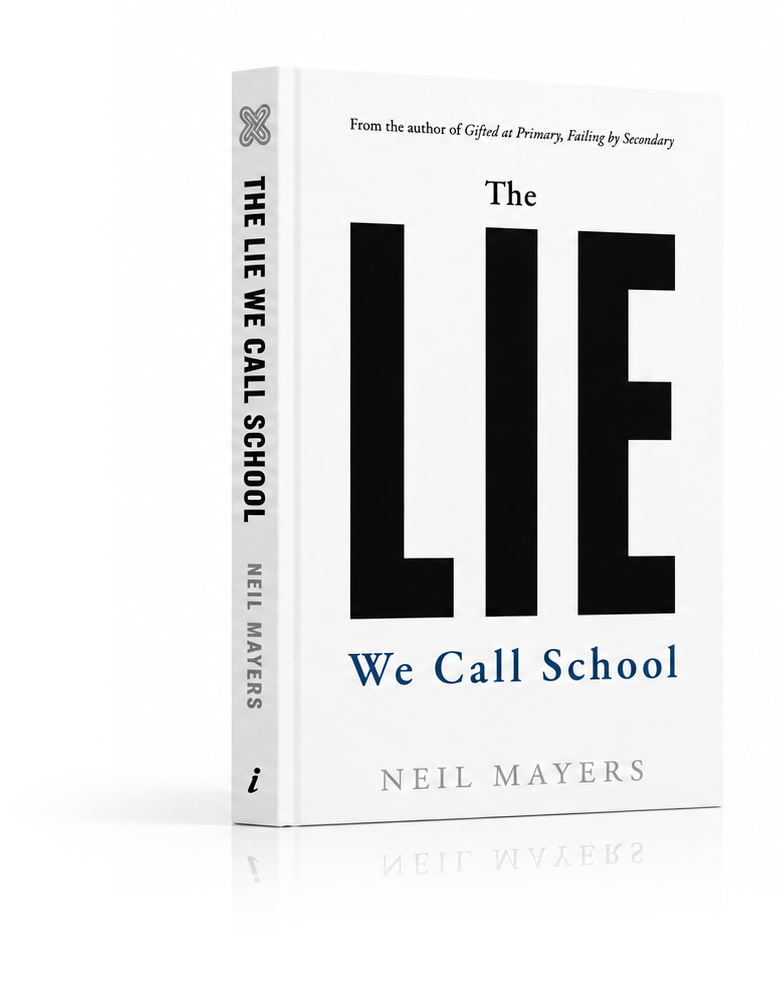
The Lie We Call School
Why the System Isn't Broken,
and Why That's the Problem
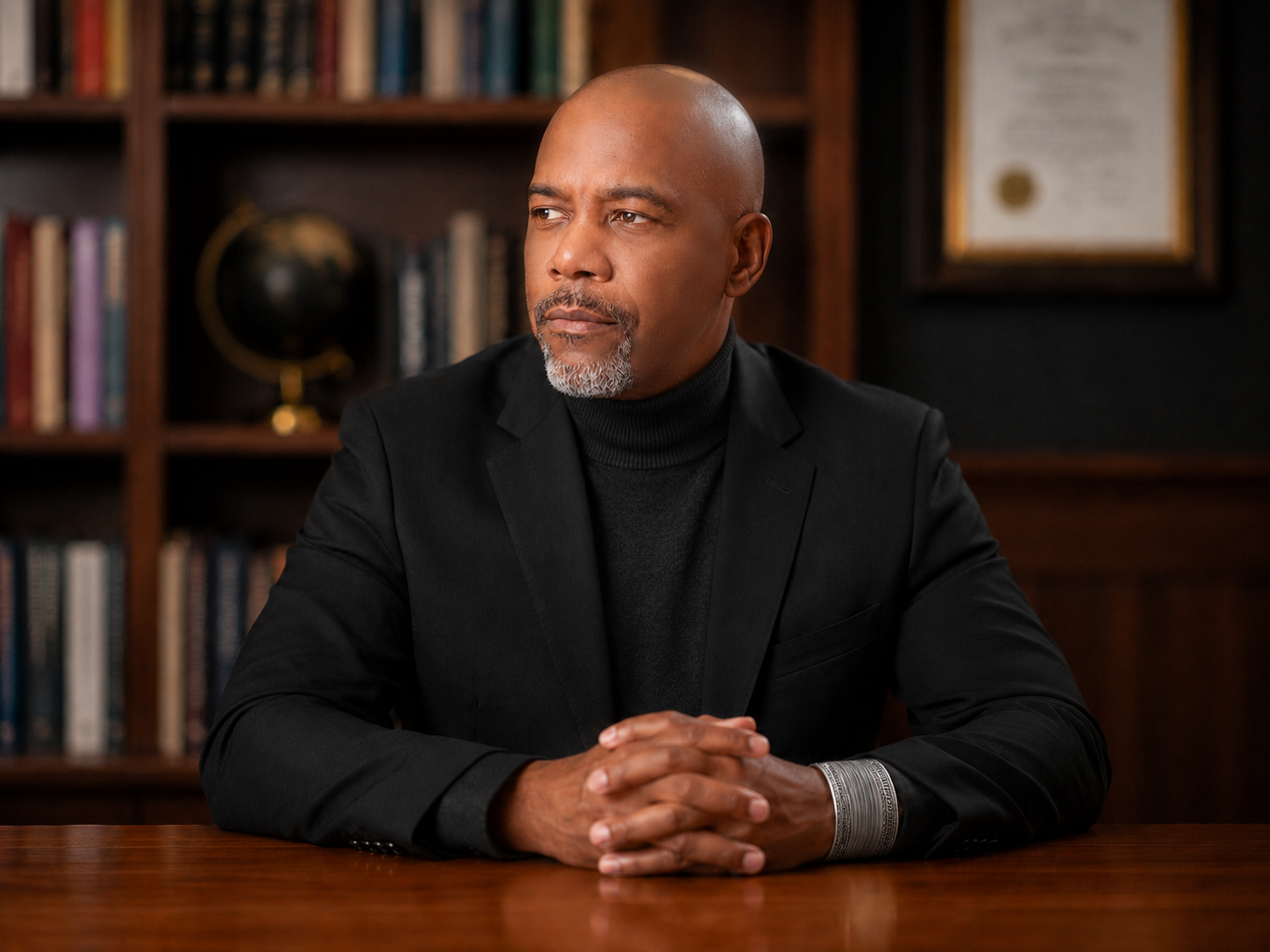
NEIL MAYERS, FORMER HEADTEACHER | AUTHOR | SPEAKER
“One of the most powerful and transformative sessions the Civil Service Race Forum has ever hosted.”
Audience member, Civil Service Race Forum, November 2025
This is not a reform manual. It is an exit strategy.
The system is not broken. It's performing exactly as it was designed to. It's time to stop trying to fix it and get busy replacing it.
Every generation, the same conversation happens. Exam results come out. The gaps are reported. Committees are formed. Reports are published. The language changes, but the same disparities persist. And another cohort of children, particularly many Black children, moves through a system that was never designed with them at its centre.

A Systemic Critique
The Lie We Call School is a systemic critique of modern education through the lens of Black educational experience. Because when you want to understand what a system is designed to reward, study the people it serves least well and most consistently.

Over Twenty Years in Classrooms
Former UK high school principal (Headteacher) and education consultant Neil Mayers has spent more than twenty years in schools in London and Atlanta, Georgia. In this book, he traces patterns common to both systems back not simply to funding, teachers, or communities, but to the design assumptions of mass schooling itself.

Was Not Built to Develop Children
The education system was not built around developing the unique potential of each child. Modern mass schooling prioritised standardisation, prescribed content, and institutional control. Individual flourishing was never its organising principle, and Black children were certainly not at its centre.

The Missing Variable
What Mayers calls Cultural Esteem, the psychological foundation built from accurate knowledge of one's heritage and history, is a variable too often missing from conversations about Black underachievement, school failure and disengagement. Skills and expectations matter, but children are also shaped by what school teaches them, explicitly and implicitly, about their own history, identity and worth.

Not Only for Black Parents
But this book is not only for Black parents. It is for every parent watching a bright child shrink inside a system that rewards compliance over curiosity. It is for every teacher who knows the curriculum they are delivering is not fit for purpose, and every school leader and policymaker willing to confront what the evidence has been saying for decades.
The rescue is not coming from the institution. It never was.

The gap between the classroom and the real world was always a chasm. The school system was never designed to close it. On one side is a standardised institution built around common timetables, common subjects, common assessments and institutional control.
On the other: an AI-driven world that demands critical thinking, emotional intelligence, financial literacy, and cultural confidence.
Mayers does not offer tips. He does not suggest reforms. He offers an exit strategy and a blueprint for what must replace the current model: seven new core skills built for the world children will actually inherit.
The rescue is not coming from the institution. It never was.

One of the most powerful and transformative sessions the Civil Service Race Forum has ever hosted.”
Audience member, Civil Service Race Forum, November 2025
Ordering for a school, team, or organisation?

Send us a few details, your organisation, how many copies, and what it's for, and we'll get back to you directly.
FREQUENTLY ASKED QUESTIONS
-
Primarily for Black British and Black American parents. Also for every parent, teacher, school leader, and policymaker who wants to understand why the system produces the outcomes it does, and what to do about it. The book is written for a general audience, not academics. You don't need a background in education to read it.
-
No. Black children are the clearest example of what the system does when it's working as designed. But the argument applies to every child. The system was never built to develop potential. It was built to produce compliance. Every child is affected by that, just not equally.
-
Most education books offer reform: better funding, better training, better policy, all working within the existing system. This book doesn't. It argues the system is doing exactly what it was designed to do, and that reform protects a design that needs replacing, not fixing. It offers an exit strategy, built around Cultural Esteem and the Seven New Core Skills, rather than another set of tips for coping inside the current model.
-
No. Neil draws on more than twenty years in education across the UK and US, including London and Atlanta, Georgia. The specific exams and curricula vary by country, but many mass education systems share structural features such as age grouping, standardised curricula, fixed timetables and high-stakes assessment. The book asks what happens when institutional efficiency and standardisation are placed ahead of individual development.
-
The book itself is written for adults, parents, teachers, school leaders, and policymakers, not for children to read directly. Its Seven New Core Skills framework covers five age-band checkpoints running from Nursery through to ages 15 to 18, so whatever age your child is now, the book will tell you what to look for and what to build towards next.
-
No, this isn't a homeschooling curriculum. But if you are homeschooling, the free 105-activity Activity Bank built around the Seven New Core Skills, is an invaluable bank of ready-made resources you can use straight away.
Available now on Amazon. Read the first two chapters free.