THE TRUTH
The System Isn’t Broken. It’s Performing Exactly As It Was Designer To.
Our school system was not built to develop each child's curiosity, confidence, or critical thinking. It was built around standardisation, prescribed content, and institutional control. Those priorities still shape what school rewards today.

WHERE IT ALL BEGAN
Modern mass schooling did not begin with one inventor or one single event. One important milestone came in Prussia in 1763, when Frederick II issued the General School Regulations, drafted by Johann Julius Hecker. They required regular school attendance, prescribed approved teaching material, fixed school hours, inspection and rules of discipline.
The decree explicitly aimed to educate better subjects for the state. Whatever benefits mass schooling brought, the unique flourishing of each individual child was not its organising principle.
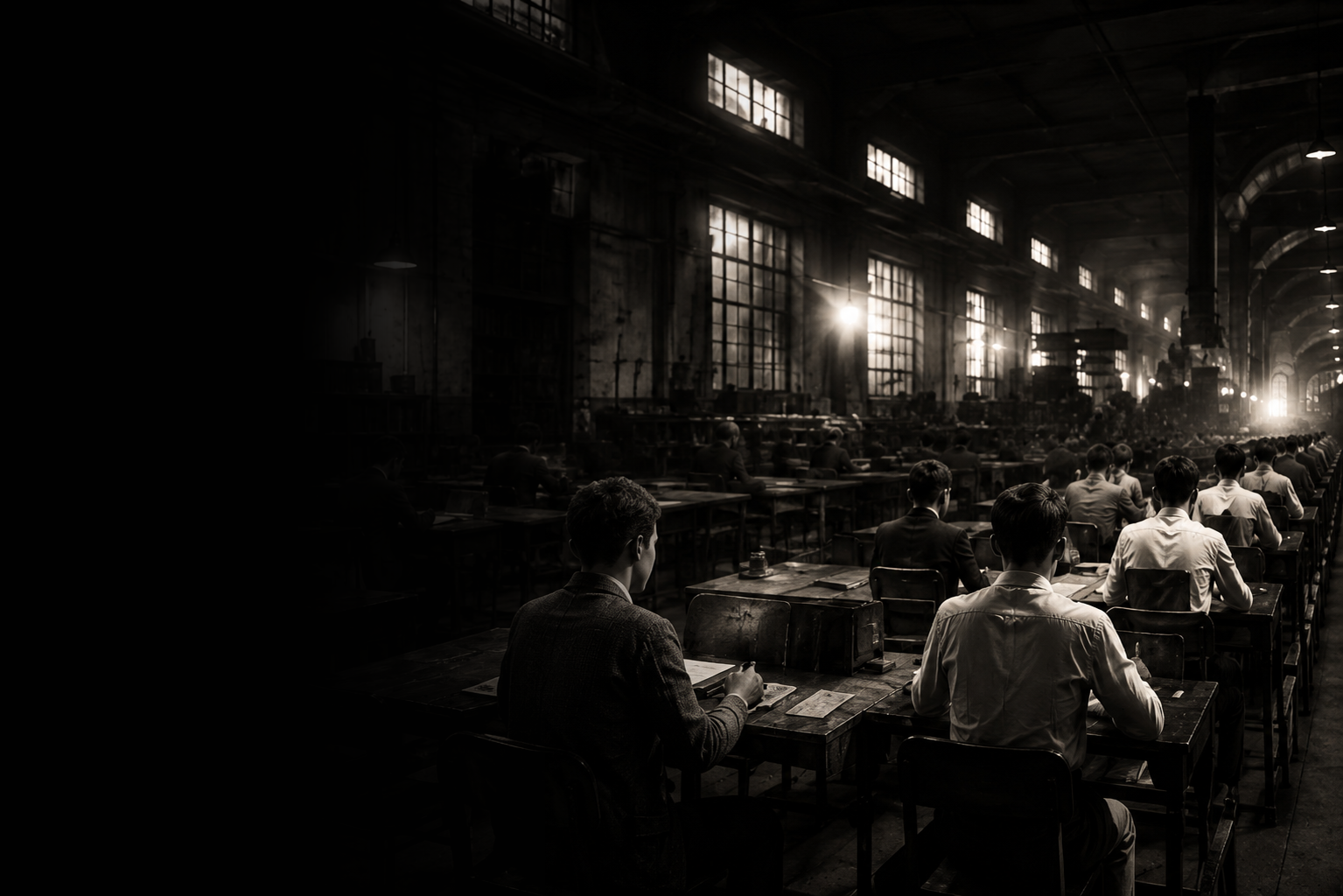
The Factory Model Of Education Prussia. 18th Century. Still Running Today.
Children in rows
Easy to see. Easy to manage.
Fixed School Hours
School Timings organised centrally


Standardised content
The same for everyone. No room for individuality.
Exams and ranking
Schools & teachers monitored by authorities.
Discipline & Conduct
Behaviour regulated and recorded.
The problem isn’t simply that the world changed. It’s that the individual child was never the primary concern in the first place.
The deeper problem was already there, and it still is.
- Neil Mayers
This model spread across Europe, then the world.
It was never about helping children become their best.
It was about controlling the future workforce.
THE SAME SYSTEM. DIFFERENT CENTURY.
The world has changed.
Our schools haven’t.
The argument is not that schooling once worked perfectly and then became outdated. It is that a system organised around standardisation and institutional control was never designed around the unique potential of each child.
Today's world makes that limitation even more visible. Young people need knowledge, but they also need judgment, adaptability, creativity, communication, emotional intelligence and the ability to solve unfamiliar problems. Yet the individual is still expected to fit the system far more often than the system is designed around the individual.
THE TURNING POINT
Once you see the system for what it really is you can’t unsee it.
Next, we look at what should replace it.
Not small changes. Not better management.
A completely new foundation.
The truth is uncomfortable. But it opens the door.

Ready to see the solution?
Let's build something better.


Understanding the truth is the first step. The solution is the next.

Continue to the next page
You’ve reached the turning point. The Solution is on the next page.