
We Already Know What Needs To Replace It.
THE SOLUTION
The question isn't whether change is possible.
It's whether we're willing to stop waiting for the system to change itself.
1. CULTURAL ESTEEM
The Missing Variable.
The Foundation Everything Else Is Built On.
Cultural Esteem is the belief that your heritage, your community, and your identity matter, and that you have something valuable to contribute to the world.
Without it, educational reform can move the numbers while leaving the deepest part of the problem untouched.
Skills matter. But a child who has absorbed the message that their culture is inferior is being asked to achieve while carrying a weight that school itself may have helped create.
We must teach every child to stand tall in who they are, before we can build anything else.
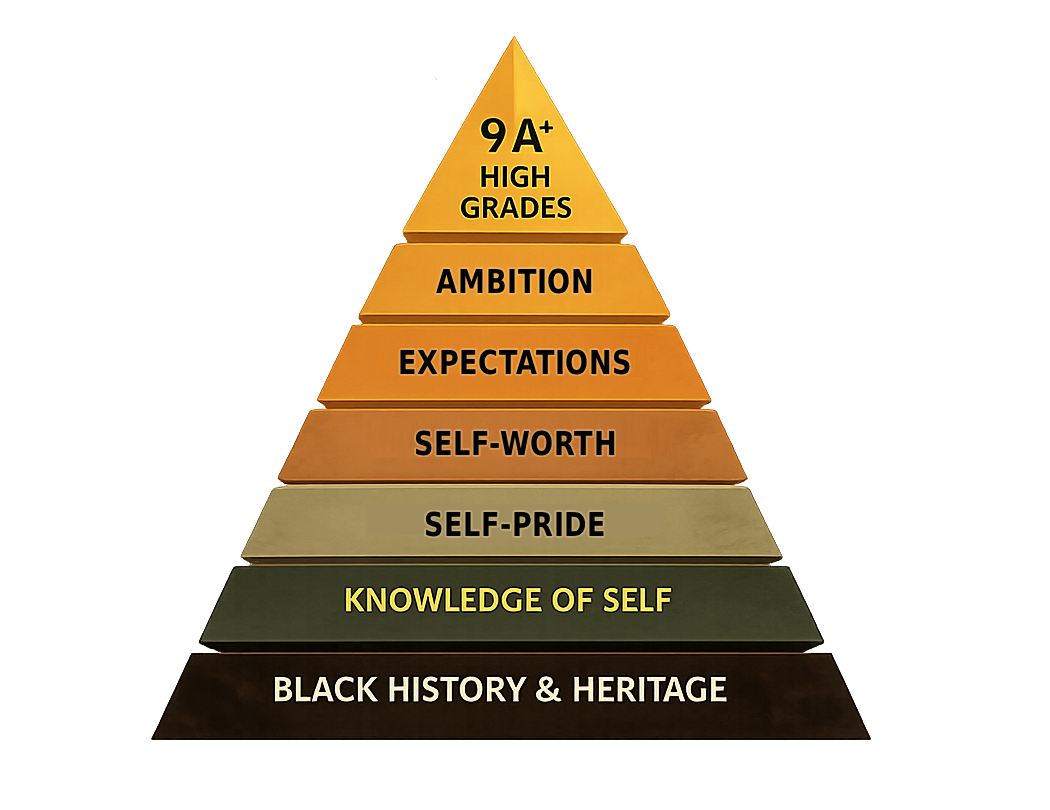
Achievement is the summit. Not the starting point.
The pyramid illustrates what Cultural Esteem actually looks like. High achievement isn't the starting point. It's the summit.

If You Destroy The Root, You Cannot Expect The Fruit.
A tree with strong roots can grow in any direction and still produce fruit.
A tree with no roots will grow only as far as the wind allows, and it will never bear fruit.
Cultural Esteem gives our children roots.
Cultural Esteem Builds The Foundation.
The Curriculum Builds Everything Else.
The current system spends enormous energy trying to fix the summit while ignoring the foundation.
But a foundation alone is not a house.
If we want different outcomes, we need a different curriculum.
2. THE SEVEN NEW CORE SKILLS
These Skills. Not Just Knowledge.
This Is The New Curriculum.
We don't need more of the old.
We need something different.
These seven skills prepare children for the world they're actually growing up in.

Cultural Esteem builds the foundation.
These seven skills build the future.
Together, they create a complete education that develops character, confidence, competence and contribution.
1.
Critical Literacy & Ethical Communication
Read deeply. Write clearly. Speak with purpose. Listen actively. Question everything. Communicate with integrity and respect.
2.
Applied Mathematics & Data Reasoning
Understand numbers. Interpret data. Solve real problems. Make informed decisions. Use maths as a tool for life.
3.
Scientific Thinking & Emerging Technologies
Think like a scientist. Solve problems. Adapt to new technologies. Innovate responsibly. Stay curious about how the world works.
4.
Digital Fluency
& Algorithmic Control
Understand the digital world. Use technology with intent. Protect your data. Create, don't just consume. Stay ahead of the algorithms.

5.
Emotional Intelligence
& Wellbeing
Know yourself. Manage your emotions. Build strong relationships. Handle pressure. Look after your mental and emotional health.

6.
Global Awareness & Social Responsibility
Understand the world. Respect diversity. Act with empathy. Contribute to communities. Be a responsible global citizen.

7.
Physical & Nutritional
Intelligence.
Move your body. Fuel your mind. Understand health. Build discipline. Develop habits that support a long, strong, successful life.
3. WHAT PARENTS CAN DO TODAY

Parents
Build your child's cultural esteem.
Talk about identity and heritage.
Expect excellence. Always.
Read together. Question together.
Advocate for better.
Teachers
See the whole child.
High expectations for everyone.
Make learning relevant and real.
Celebrate identity in the classroom.
Refuse to lower the bar.

School Leaders
Redesign from the ground up.
Invest in people, not policies.
Measure more than test scores.
Build partnerships with families.
Create schools children love.

The full blueprint is in the book. Start reading for free.
The Future We Could Build.
We have everything we need to build a better system.
The question is whether we will.
4. EDUCATION SHOULD PRODUCE HUMAN BEINGS, NOT EXAM MACHINES.
Schools should not exist merely to prepare children for examinations. They should prepare them for life.
Character.
Curiosity.
Critical thinking.
Cultural esteem.
Competence.
Contribution.
The purpose of education is not to manufacture obedience. It is to develop human beings capable of improving the world they inherit.
This Is Not About Going Back.
Things Worth Keeping
- Literacy
- Mathematics
- Science
- Excellence
- High standards
- Knowledge
Things That Must Change
- Industrial-age assumptions
- Testing over thinking
- Compliance over creativity
- Memorisation over understanding
- Standardisation over individuality
5. The Future Is Not Fixed.
Every generation inherits a school system. No generation is obliged to keep it.
The system was designed. Which means it can be redesigned.
The question is not whether change is possible.
The question is whether we have the courage to imagine something better.

7. Continue The Conversation.
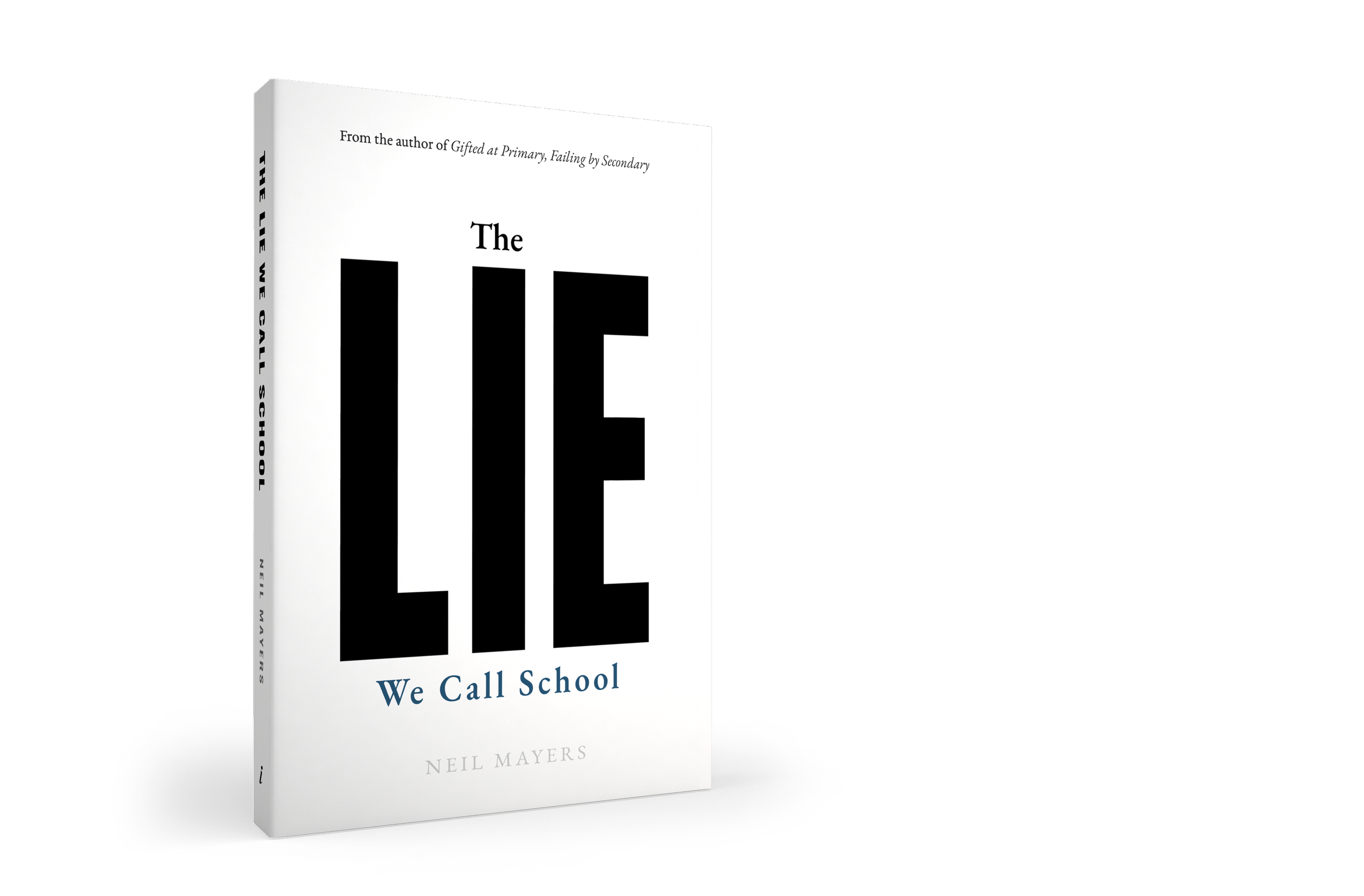
The Lie We Call School explores the history, the truth, and the blueprint for what should replace the current model.
Knowledge is the first step. Courage is the next. The future is ours to build.